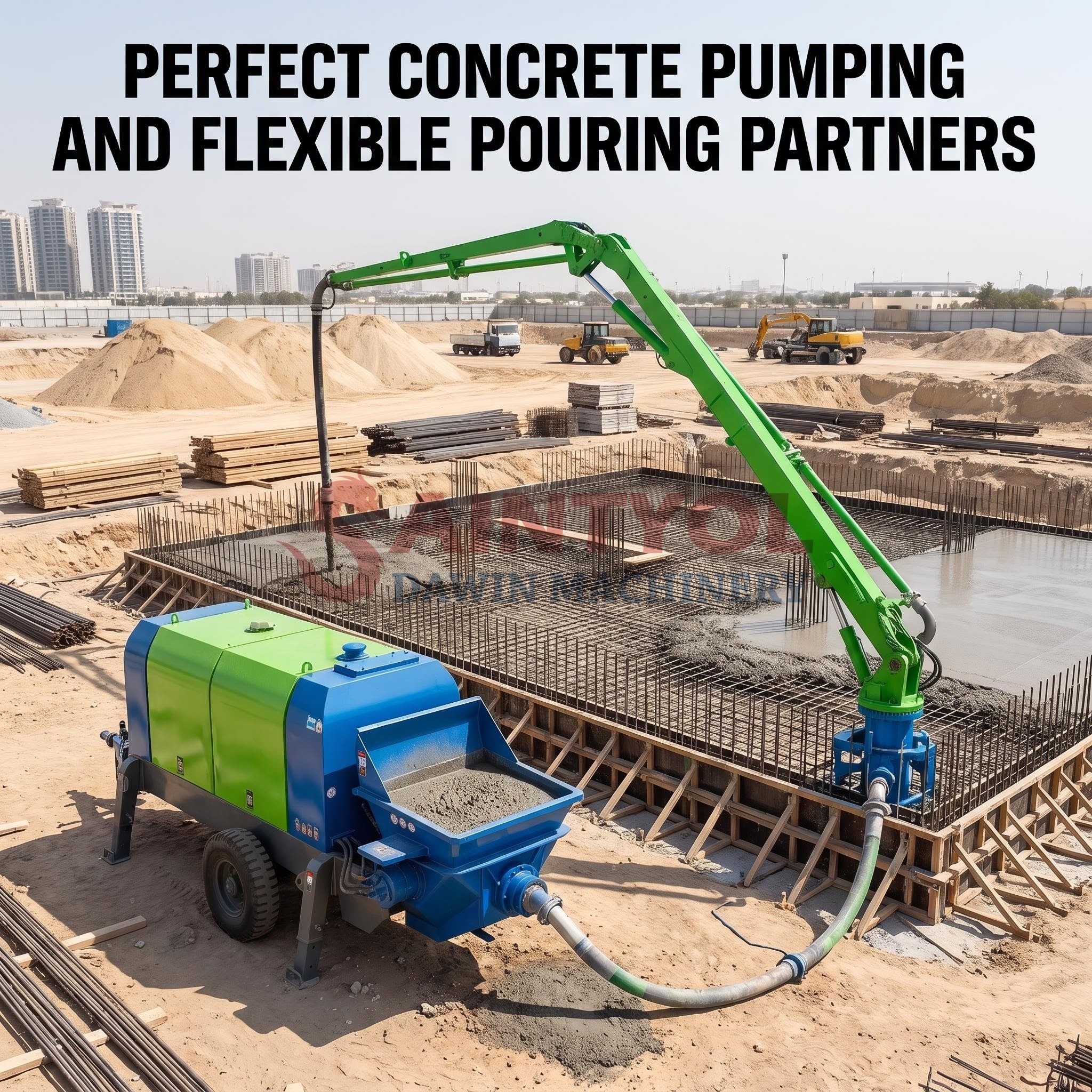
The most common mistake when buying a concrete placing boom: focusing only on boom length.
- Share
- From
- Saintyol DAWIN News Center
- publisher
- Jenny
- Issue Time
- Oct 12,2026
Summary
When purchasing a concrete placing boom, the first question that naturally springs to mind is, "How long is the arm?" While arm length is certainly a key factor—addressing the fundamental question of reach—it is other considerations that truly determine whether the equipment can get the job done effectively. Overlooking these factors could easily result in a machine that is awkward to operate or even left to sit idle.
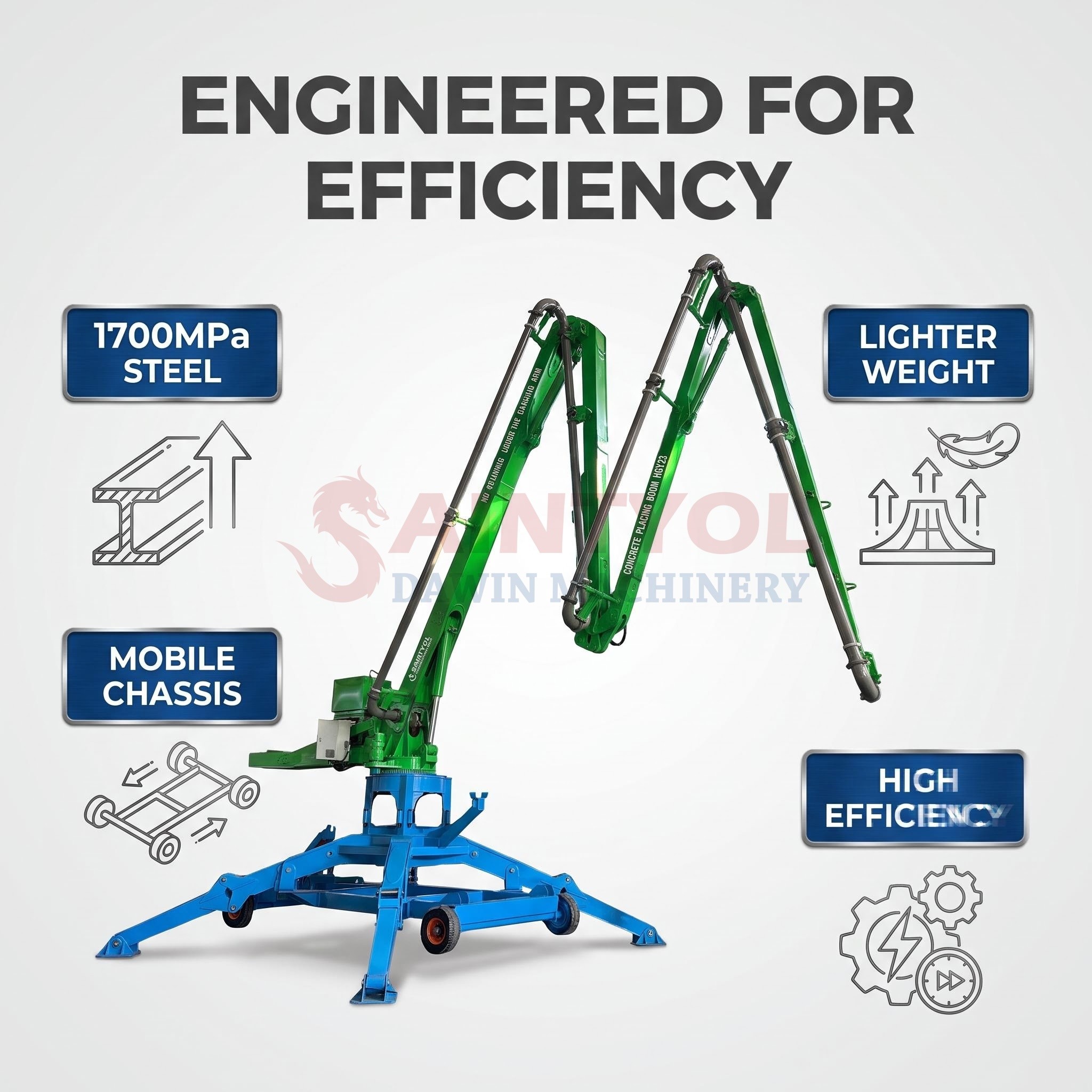
When purchasing a concrete placing boom, the first question that naturally springs to mind is, "How long is the arm?" While arm length is certainly a key factor—addressing the fundamental question of reach—it is other considerations that truly determine whether the equipment can get the job done effectively. Overlooking these factors could easily result in a machine that is awkward to operate or even left to sit idle.
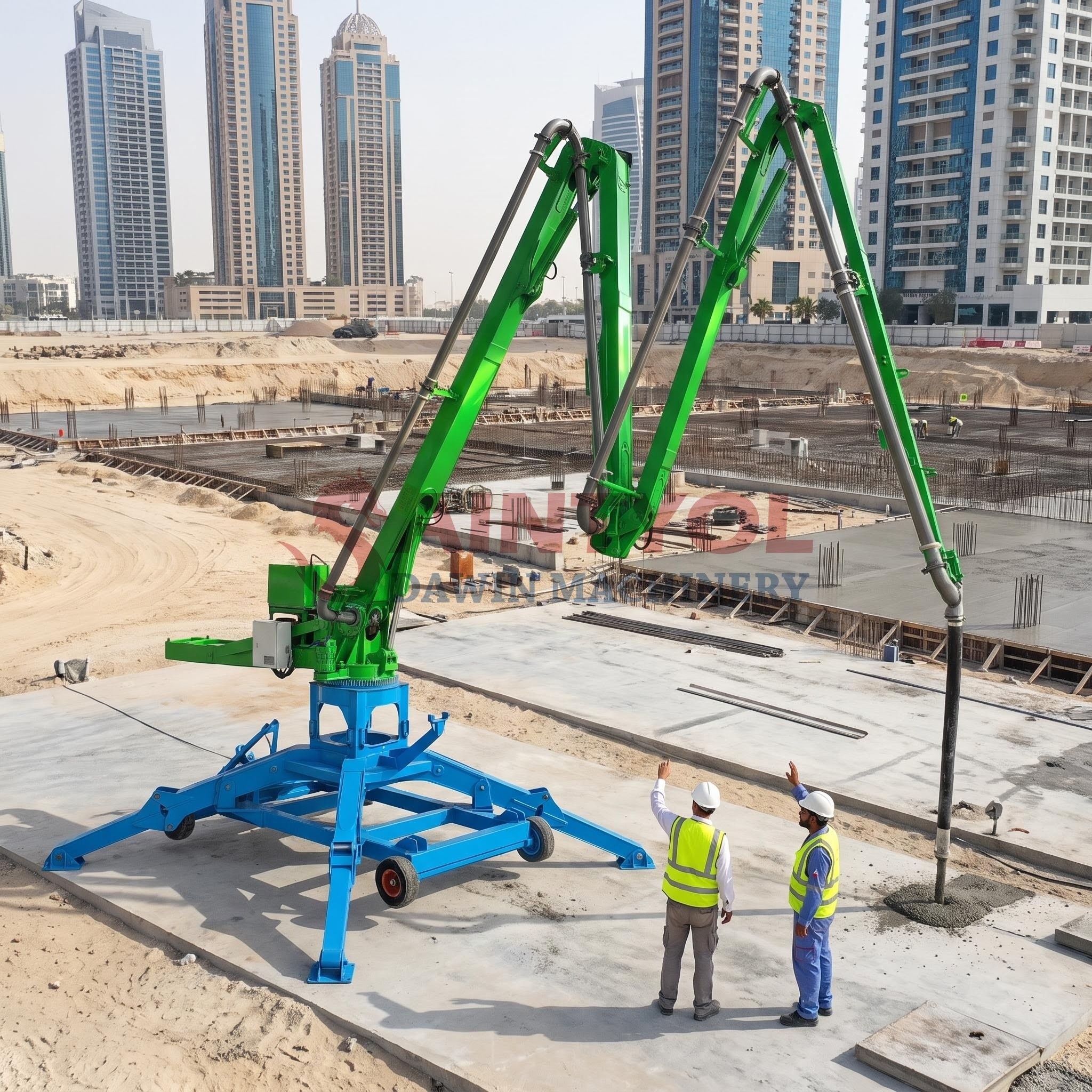
I. First, consider site accessibility
For equipment with the same boom length, some can get straight to work upon arrival, while others require road improvements first. Construction sites often lack paved surfaces; in rainy seasons or low-lying foundation pits, stationary or wheeled models frequently require steel plating for support or towing for relocation. Saintyol DAWIN Machinery crawler-mounted hydraulic concrete placing boom features a widened crawler undercarriage that offers a large ground contact area and low ground pressure. It can travel directly over unpaved, soft, or muddy ground and supports wireless remote-controlled self-propulsion, allowing a single operator to move it to the next pouring position immediately after finishing a section. The key differentiator here isn't the boom length, but the machine's ability to access the site in the first place.
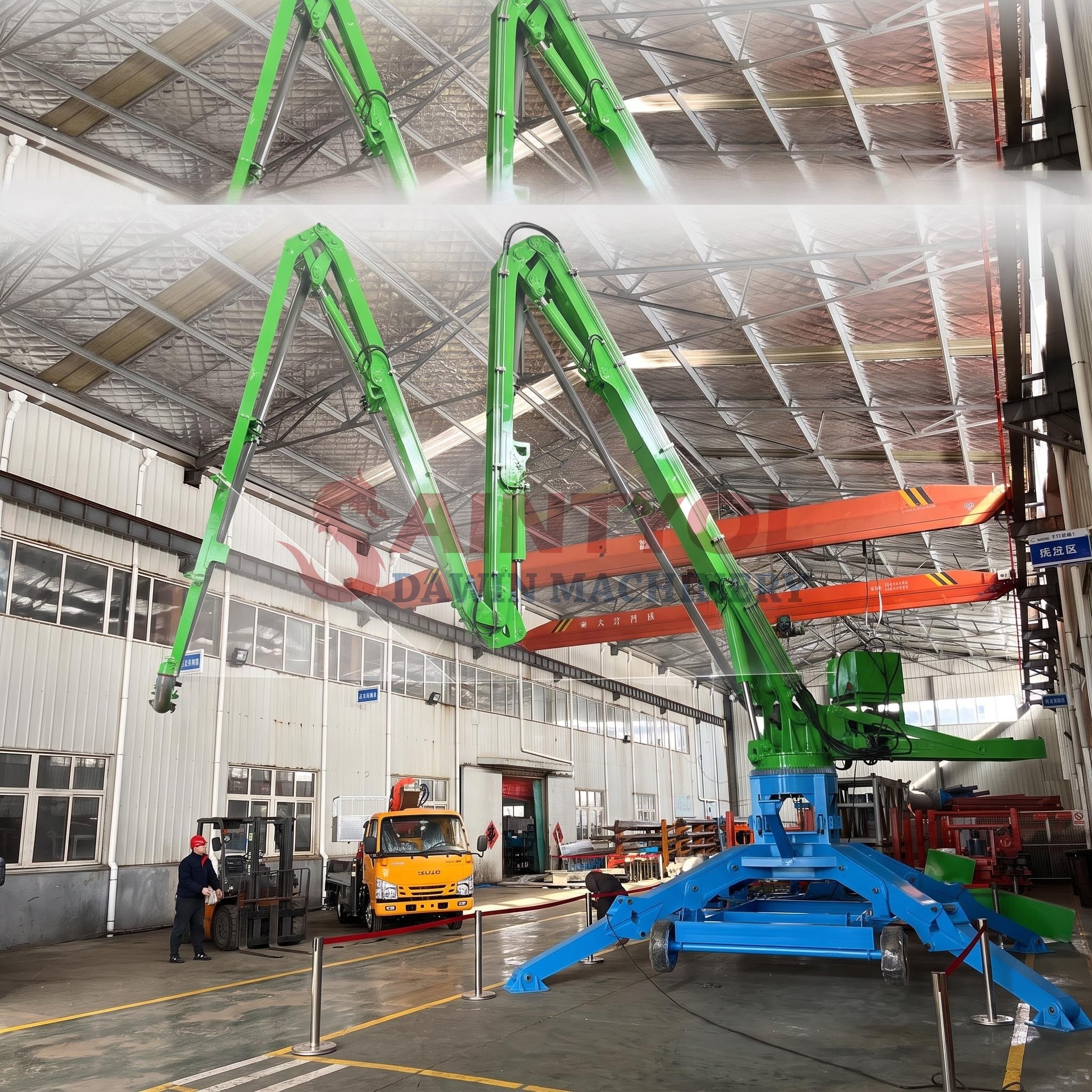
II. Next, consider how it keeps pace with vertical construction
Boom length is a horizontal measurement; it doesn't address how the equipment ascends as the building rises day by day. Some models rely on elevator shafts to climb, meaning they get stuck on projects lacking standard shafts. Saintyol DAWIN Machinery floor-climbing hydraulic placing boom ascends using the building's own floor slabs, rising alongside the structure. It is independent of elevator shafts—or their specific locations—making it ideal for high-rise and super-high-rise projects. If this aspect isn't considered, even the perfect boom length will only be useful for a short time.
III. Finally, consider long-term operational stability
Equipment is used for years, and the real test lies in long-term performance. Hydraulic drives for boom unfolding, luffing, and slewing ensure smoother operation. Using established brands for components like hydraulic motors, seals, hoses, and electric motors simplifies future maintenance. Integrated systems for overload protection, flow control, and phase sequence protection significantly reduce the risks associated with operator error. Combine this with routine pre- and post-shift checks—such as inspecting slewing bearing bolts, pipeline seals, and wall thickness—and the equipment is far less likely to fail at critical moments. So, let’s reframe the question: What are the site conditions? How will the building rise? What are the specific work areas? Who handles issues if they arise? Once these answers are clear, the required boom length naturally follows. Saintyol DAWIN Machinery product lines—including crawler-mounted, floor-climbing, mobile, and stationary models—are all matched to specific operating conditions. We look at the operating conditions first, then determine the boom length.